a maze of words leading to …?

Archive for the ‘Encyclopaedia Avalonia’ Category

Elementary Time Travel – EA. Vol. XXIII


Time travel

Encyclopaedia Avalonia, Vol. XXIII …

The Reading Organisation for Research into Elementary Time Travel (R.O.R.E.T.T) is attached to the Faculty of Parapsychology in the University of Avalon (UoA). It is the only UoA-affiliated organisation to issue exam-results in advance of the actual exams, depressing though this is for some of the students.

In R.O.R.E.T.T’s own words, their research involves: “… the study of Precognition .. its practical uses for political purposes …”

Needless to say this research has attracted the attentions of MI5 and the like, particularly since the very existence of Avalonia is a politically sensitive issue for the UK government. However, all attempts to infiltrate R.O.R.E.T.T have so far failed, since the identity of the would-be infiltrators is known to members “ahead of time” as it were (or will be), before the agents themselves have even been chosen … and in one case even before the agent had been born.

The security services have struggled in vain to resolve this paradox, in one instance even lying to themselves about their own agent’s true identity in a desperate attempt to circumvent precognition. This might have worked, except that when the agent in question attempted to contact his masters they refused to accept his credentials, charged him with impersonating a government official and filed his report under “Deliberate Misinformation”.

R.O.R.E.T.T’s occasional seminars on “Psychic Ecology” are sought after with particular eagerness, with competition for places being especially keen amongst far-sighted environmentalists and visionary Greens. Indeed, seminar places are reserved so far ahead of any advance publicity that the seminar leader has given up actually choosing the seminar dates herself and merely goes along with the inevitable.

R.O.R.E.T.T has a sister organisation called R.O.R.A.T.T (the Reading Organisation for Research into Advanced Time Travel), but of this we do not now write further for reasons that will always have been obvious to some.

R.O.R.A.T.T members – and you know who you are, or know who you will be – can appreciate the subtle rationale for this discretion. Anyone else wishing to know more will need to enrol with R.O.R.E.T.T in the first instance (and R.O.R.A.T.T in the second instance), or else read the appropriate entries in Vol. XXIV of the Encyclopaedia Avalonia, should this ever be published.
The Guild of Immortalists – EA Vol. III


Immortality

Encyclopaedia Avalonia, Vol. VIII …

The Guild of Immortalists cleave to the notion of physical immortality. Believing death to be a mistake, they campaign endlessly for its abolition and once broached the subject with a local Member of Parliament … but discussions broke down almost immediately when, as a committed Conservative, he made clear his views on bringing back the rope.

At social gatherings Immortalists have a tendency to panic when the chit-chat turns to cyclic patterns of birth, life, death and rebirth. Thus they do not mix well with either Servants of the Goddess or Priestesses of the Nine-fold Muse, finding mention of Pluto and Persephone to be far from relaxing and being deeply unsettled by tales of harrowing hell, the Underworld, Hecate, midnight cross-roads and the Morrigan.

The Guild of Immortalists are rumoured to believe that having sex at least twice every 24 hours is a way of retarding the ageing process.

The Guild of Immortalists:

  • Tribal motto: “Deus Sex Machina”.
  • Tribal refuge: Windmill Hill and (Sundays only) the 4th Dimension
  • Favourite colour: Eternal Flame Red
  • Favourite TV programme: Dr. Who
  • Favourite films: Peter Pan; Bram Stoker’s Dracula
  • Favourite dangerous sport: Near Death Experiences
  • Favourite saying: “Never say Die”

The Glastonbury Carnival – EA Vol. XX


Carnival1

Encyclopaedia Avalonia Vol. XX …

Ah yes … the annual “Glastonbury Carnival”, much enjoyed by stout Glastonburgers[1].

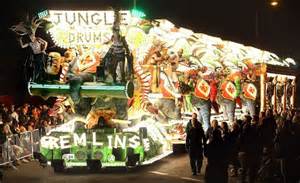
To most people the word “carnival” conjures up images of people dancing in the streets, sultry night air, wild music and even wilder abandon. This is something of a contrast with the bizarre phenomenon that arrives in Glastonbury in the middle of each November. People come from far and wide to see it. Crowds of people, up to 100 million strong, line the streets, muffled to the eyebrows, their pinched and frozen faces seeming even whiter in the reflected glare of the ten billion light bulbs that edge and adorn the processional, tractor-drawn floats.

Each float blasts out a different song – usually “Tie a Yellow Ribbon”, “If I Was Rich Man” or one of Abba’s “Worst Hits” – and these raucous sounds compete both with each other and the yammering generators that are towed behind each float. No one in the crowd dances, for there is no room to move and you wouldn’t want to dance to these songs anyway. Besides, Glastonburgers – especially the stout ones – rarely dance and certainly not in public on an icy-cold High Street. Perhaps they are simply overwhelmed, pushed into hypnotic trance, by the sheer volume of sound and light. The exhaust fumes from 10,000 gallons of diesel fuel must also take their toll.

In fact the only people who dance are those on some of the floats. This “dancing” usually consists of a short sequence of vaguely synchronised movements, about 20 seconds for the complete routine, endlessly repeated over and over to the same jingle as the float grinds slowly along its bulb-lit way. The whole procession takes over two hours to pass. That’s a lot of 20-second dance-routines per float, more than 360 to be precise.

Each float has a different focus and judges award a prize for the best one. It’s a curious thing, but many of the themes seem to centre on sado-masochism. Witness, for example, a float called ‘The Flight of the Valkyries’: as Wagner’s dramatic music poured forth, a variety of scantily-clad men and women lustily whipped other scantily-clad men and women who were chained to poles on the ‘ship’s deck’. The crowd was suitably stunned, but this was possibly shock from the absence of an Abba song.

Preparations for this grand Carnival begin long beforehand, when the floats begin to take shape. The Glastonbury Times[2] has described how:

“All over the region miniature building sites ring to the sound of hammers and portable radios far into the night, and in a couple of months … traffic on the main roads will become chaotic as crocodiles of enormous edifices, their secrets coyly draped, lumber painfully up hill and down dale, followed patiently by vehicles large and small, unable to go about their lawful business until the sacred carnival floats reach their destination.”

The usual result, the article noted, was “Thirty or so Young Farmers doing a step-and-kick routine dressed as golliwogs.”

[1] Not be confused with Glastafari.

[2] Published by Unique Publications.

Methodists – EA Vol. IX


Methodism

The Tribes of Christianity – Encyclopaedia Avalonia Vol. IX ….

Methodists are just that – methodical. In their systematic search for Truth they leave few stones unturned and are therefore not welcome at Stonehenge.

There is method even in their madness, and for this reason the “method school” of acting is named after them.

This should not be confused with the “rhythm method” of Catholic thespians, who will only agree to full performances at certain times of the month, tending otherwise to withdraw from the stage before the play has reached its climax.

GlastonSpeak – EA Vol. VII


Tor

Encyclopaedia Avalonia Vol. VII …

GlastonSpeak – The Essential Guide was compiled by a reader in mytho-linguistics at the University of Avalon.

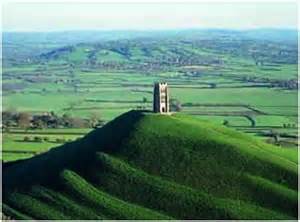
Its original release into the public sphere was marred by confusion and controversy, as some of the publisher’s more unscrupulous sales staff sold copies into Tourist Information Centres on the false premise that the book was actually called Glaston’s Peak, an essential guide to the famous hill (Glastonbury Tor) that rises spectacularly above the surrounding Vale of Avalon.

Several law-suits were only narrowly avoided, especially when copies were purchased by a group of American tourists from the Bible Belt. These had not really wanted a book on mytho-linguistics in the first place. Indeed, several of them had great difficulty reading any text not peppered with words like “begat”, “sin” and “struck down” (AE editor’s note: we would say “liberally peppered”, but this seems inappropriate in the circumstances).

Although most of the text was beyond them, said tourists did strenuously object to an entirely whimsical entry under “American” which ran as follows:

“Originally, American was pronounced Amohican, derived from A Mohican, but that was before the national gene-pool declined.

Thus the popular term ‘red-neck’ refers to Americans who are either deeply embarrassed by the post-Mohican national decline, or else striving hard to gain a Mohican colouring.

The term is also used to describe the condition of those who’ve been soundly beaten about the upper shoulders with a Bible Belt.”

Litigation was only prevented when solicitors acting for the publishers claimed that the book was actually the work of the devil, and thus retribution – or “striking down” as the lawyers cannily put it – was best left in the thunderbolt-wielding hands of Jehovah. The Bible-Belters relented, saying it was the first piece of common sense they’d heard in a long while.

A few other excerpts from GlastonSpeak run thus:

  • “Half a mix” (colloquially, “Arf a mix”). This is a shouted public request / invitation, which translates as: “someone please give enough hashish for this next communal joint / pipe / chillum.” Though the origins are somewhat obscure, it is believed to refer to a half-and-half smoking mixture of cannabis sativa and tobacco.
  • “Blag”: beg, borrow or (if these fail) steal.
  • “Blim”: a little bit of hashish, or else a large bit, or else almost all the hashish that someone may have.
  • “Blag a blim”: obtain enough for the next joint / pipe / chillum. “Blim” in this context is a contraction of “Blimey”, which in turn is a contraction of “Blim me”. Originally, as in “well Blim me!”, it was an expression of astonishment that someone had actually given enough hashish for the next joint / pipe / chillum. Some scholars, however, argue that this declaration of amazement usually came after smoking the next joint / pipe / chillum.
  • “Blim a blag” means nothing at all. It’s a nonsensical expression used to confuse outsiders.

Unitarians – EA Vol. XIV


Unitariansim

The Tribes of Christianity – Encyclopaedia Avalonia XIV …

Unitarians, as their name suggests, believe in one thing and one thing only – Unity.

They thus believe that it doesn’t really matter what they believe as long as they all believe the same thing.

Unhappily this rather vague doctrine has proved somewhat too shallow a basis for cementing congregational loyalty … so their flock has gradually fallen by the wayside[1], leaving just one member. The Unitarian Church – now called the Church of the Unitarian – has thus perfected its doctrinal expression and is finally assured of a stable future.

[1] Many have become Trinitarians – i.e. ex-Unitarians who are in three minds about it.

Mormons – EA Vol. XII


Mormon1 Mormon3

The Tribes of Christianity – Encyclopaedia Avalonia Vol. XII …

Mormons are polygamous, but in practice this is difficult since very few women wish to live by a salt-encrusted lake in Utah.

Mormons believe that baptism by total immersion is necessary for salvation. This is unfortunate because the salt in question is highly corrosive. Luckily however, converts can now be baptised by proxy, for a fee, at the Mormon HQ in Salt Lake City. The life-volunteer who is used for this must face a daily average of around 500 salty dunkings. At first he didn’t mind too much, but has since become somewhat bitter.

Mormon followers include Donny Osmond and his brother disciple Jimmy.

Officially speaking the chief object of Mormon veneration is a hippy-like figure from Nazareth who loved people. But unofficially they prefer Jimmy’s hymn about a long-haired lover from Liverpool.

Jehovah’s Witnesses – EA Vol. II


Jehovah's Witnesses

The Tribes of Christianity – Encyclopaedia Avalonia, Vol. II …

Jehovah’s Witnesses took their name after successfully providing evidence for the prosecution in the landmark trial of Jehovah vs. Jehovah.

Legal history was made when the court awarded Jehovah (the Father) custody rights over Jehovah (The Son). In so doing it dismissed the claims of Jehovah (The Holy Ghost), partly on the grounds that her/his evidence was immaterial and her/his case lacked all substance, but mainly because she/he was invisible and thus it was unsafe in law for the court to even presume her/his presence in the witness box. Summing up, the judge said that she had never seen anything like it.

Jehovah’s Witnesses meanwhile, having gained a taste for court-room drama, now go around hurling wild accusations at the drop of a mitre. In Avalonia for instance, a local raconteur and part-time spiv was accused by one such Witness of being a Satanist on the grounds that he has a black cat called Lucifer.

His case comes up next February.

The Indian Nation – EA Vol. VII


Tipi Circle3

Encyclopaedia Avalonia, Vol. VII …

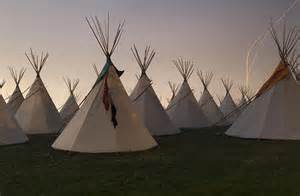
It says much for the broad-minded tolerance of Avalonian citizens that they permit, even encourage, an entire separate country (the Indian Nation) to share their sovereign territory.

Being a tribal confederacy, the Indian Nation maintain strong links with their blood-brothers and blood-sisters outside of Avalonia – the semi-nomadic Tribe of Doris, for example, or the Black Valley Tipi Tribe, who are normally confined to a Reservation in mid-Wales.

Local pow-wows usually take place in the Glastonbury Assembly Rooms and are sometimes attended by Chieftains and Medicine People from the ancestral homelands in North America. These emissaries have exotic names like Sun Bear (no relation to Yogi), Harley Swiftdeer (runner-up in the 2001 Isle of Man TT), Dreamwalker (cousin to Sleepwalker) and Fire Wolf (Incendia Lupus).

Tribal members typically start their day by eating food derived from ‘power-plants’ (Cornflakes or Weetabix for instance) – whence the origin of the term ‘power-breakfast’. This is usually followed by a pipe ceremony which – depending on the size of the pipe, the power of its ‘power-contents’ and the number of participants – usually takes care of the rest of the day quite nicely.

At dusk, a ‘sweat lodge’ is normally taken to rid the body of the toxins absorbed from the pipe ceremony. Hot stones are placed in a small pit at the centre of a makeshift sauna. Since it is quite dark inside the sweat lodge, participants are very careful not to sit in the ‘power-spot’ as the resulting burns can be quite painful and the treatment of these (see below) even worse.

Before retiring to their tipis for the night, some tribal members take their ‘power-animal’ for a last walk, whilst others ritually strike their nearest neighbour with a false hair-piece. This obscure act, known as a ‘wig-wam’, usually causes little damage unless performed by an important tribal elder (aka a big-wig).

Any serious injuries brings into play a ‘Medicine Wheel’ – the Indian Nation’s main healing device. This large and heavy artefact is slowly rolled over the patient’s body. It does not effect a cure, but the severe pain induced does cause the victim to forget whatever it was they originally complained of.

The Indian Nation:

  • Favourite colour: Red
  • Tribal refuge: The Tipi Circle (Glastonbury Festival, Worthy Farm)
  • Favourite saying: Ho ! (a Hopi Indian expression of supportive concurrence, as in “Here, here”, or “Right On”, or “I’ll drink to that”)
  • Favourite power-spot: The King’s Field Totem Pole (Worthy Farm) [also see “Green Gatherings, Encyclopaedia Avalonia, Vol. VII]
  • Tribal motto: “A peace-pipe a day keeps the Medicine Wheel away”
  • Most common illness: None admitted
  • Least favourite sport: Squash
  • Least favourite vegetable: As above

The Shambananas – EA Vol. XIX


Ice Crystals

Encyclopaedia Avalonia, Vol. XIX …

With the Shambananas one hardly knows where to begin, but it is widely supposed that the Shambhala Healing Centre, below the south-eastern slopes of Glastonbury Tor, is as good a place as any.

An entry concerning the Shambananas in EA Vol. XVIII says “see Special Issue”, but the last remaining copy of this latter tome is rumoured to have been snatched off the market and buried, under lock and key, beneath the large crystal star that is set in the Healing Centre’s patio. According to Shambananan dowsers, this star marks the exact cosmic energy centre of Planet Earth. The tribal elders continue to thank the “Starry Ones” for siting this on the patio and not in the nearby kitchen, as this has avoided countless domestic rows over where to put the food-mixer, or whether to mop the floor.

(more…)